By SCM Professionals
In healthcare, successful transformation depends on far more than executive vision or well-crafted strategic plans. While leadership defines direction, it is often middle managers who determine whether those ideas become meaningful operational improvements or stall before reaching the front lines.
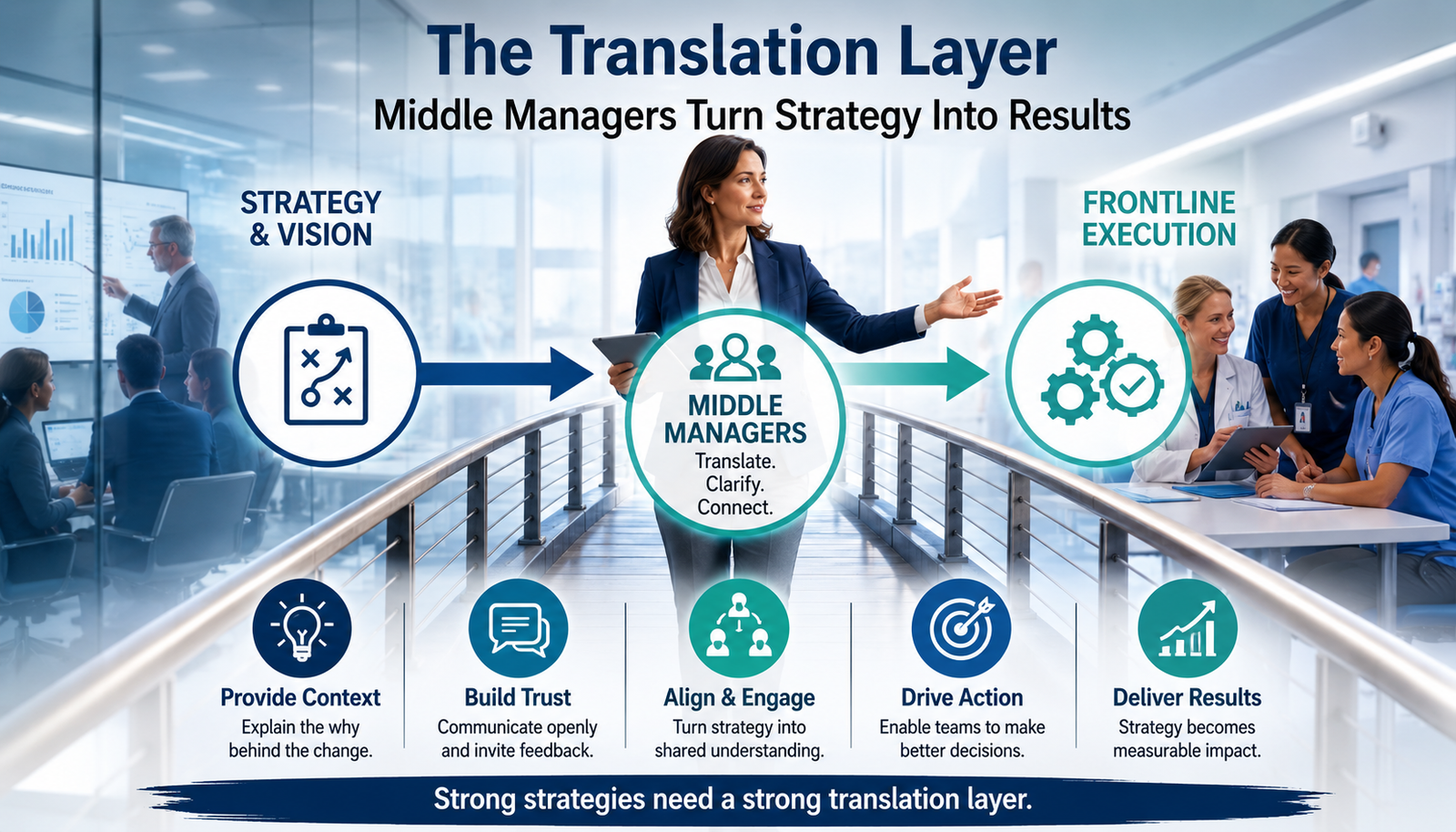
Too often, organizations describe middle managers as the people responsible for “cascading the message.” In reality, their role is much more significant. They are translators, bridging the gap between executive intent and day-to-day execution.
Turning Strategy into Action
High-level objectives such as improving supply availability, strengthening accountability, or recovering financial margin sound straightforward in the boardroom. However, those priorities only create impact when they are translated into clear operational actions.
Effective managers help their teams understand what change actually looks like in practice. They connect strategic goals to workflow adjustments, resource management, process improvements, and patient care implications. By providing context and clarity, they transform abstract objectives into decisions employees can understand and act upon.
Without this translation, even the best strategies risk becoming disconnected from the realities of frontline operations.
When Communication Loses Its Meaning
Many organizational initiatives struggle not because the strategy is flawed, but because managers are expected to communicate changes without fully understanding the reasoning behind them.
Receiving a presentation or rollout plan is rarely enough. Leaders also need insight into the business case, historical context, expected tradeoffs, and decision-making boundaries. Without that foundation, messages can become inconsistent, oversimplified, or unintentionally distorted as they move through the organization.
The result is often multiple interpretations of the same initiative, creating confusion and reducing confidence among frontline teams.
Context Builds Trust
The strongest operational leaders do more than repeat instructions. They provide perspective.
They explain why changes are necessary, acknowledge potential challenges, clarify what will remain the same, and invite feedback from those closest to the work. Equally important, they are willing to admit when answers are still developing and commit to finding them.
This level of transparency fosters credibility and trust, helping teams navigate change with greater confidence and engagement.
Strengthening the Operational Middle
Organizations seeking lasting transformation should invest in middle managers as strategic partners rather than treating them solely as communicators.
That means involving them earlier in planning discussions, encouraging them to challenge assumptions, and equipping them with the business rationale, decision rights, and practical examples needed to lead effectively. Managers who understand the purpose behind a change are better prepared to address concerns, adapt messaging for their teams, and maintain alignment without losing strategic intent.
The Strategic Importance of Translation
Every major initiative ultimately depends on people translating ideas into consistent daily behaviors. Middle managers convert executive priorities into team conversations, performance expectations, and operational decisions that directly affect outcomes.
When organizations strengthen this translation layer, they improve execution, increase engagement, and create greater resilience during periods of change. When they neglect it, even the most promising strategies can lose momentum before meaningful results are achieved.
Closing Perspective
Healthcare transformation is not driven by presentations or policy documents alone. It succeeds because leaders at every level understand the mission and can explain it in ways that resonate with the people responsible for carrying it forward.
Middle managers are not simply passing along information. They are interpreting strategy, building trust, and enabling execution where it matters most. Recognizing and empowering this role may be one of the most effective ways organizations can turn ambitious plans into measurable, sustainable progress.