Author: brendan.stutz
-

When Everything Is a Priority, Execution Becomes Theater
By SCM Professionals Healthcare organizations rarely suffer from a shortage of priorities. Patient experience. Margin recovery. Workforce stability. Access. Quality. Standardization. Digital transformation. Supply assurance. Throughput. Safety. Growth. Engagement. Every one of these priorities can be justified. And that is precisely the challenge. When everything is treated as equally important, organizations lose the ability to…
-

Ownership Without Authority: The Hidden Frustration of Operational Leaders
By SCM Professionals Accountability is one of the most frequently discussed principles in healthcare leadership. Every strategic initiative needs an owner. Every operational metric needs accountability. Every improvement effort needs someone responsible for moving the work forward. On the surface, that approach makes sense. Clear ownership creates focus, establishes expectations, and helps organizations avoid confusion…
-

The Capacity Lie: Why Healthcare Keeps Pretending People Have Room for More
By SCM Professionals Healthcare organizations rarely struggle with ideas. There is no shortage of improvement initiatives, strategic priorities, operational projects, or performance goals. Every initiative is designed to improve patient care, strengthen financial performance, increase efficiency, or prepare organizations for the future. Yet one assumption quietly undermines many of these efforts. Someone can always take…
-

Initiative Fatigue Is Usually an Execution Problem
By SCM Professionals Healthcare organizations are constantly evolving. New technologies, operational improvements, financial pressures, workforce challenges, and regulatory changes all demand continuous adaptation. Yet one phrase continues to surface across health systems whenever a new initiative is announced: “Here we go again.” That reaction is often labeled as initiative fatigue. The common assumption is that…
-
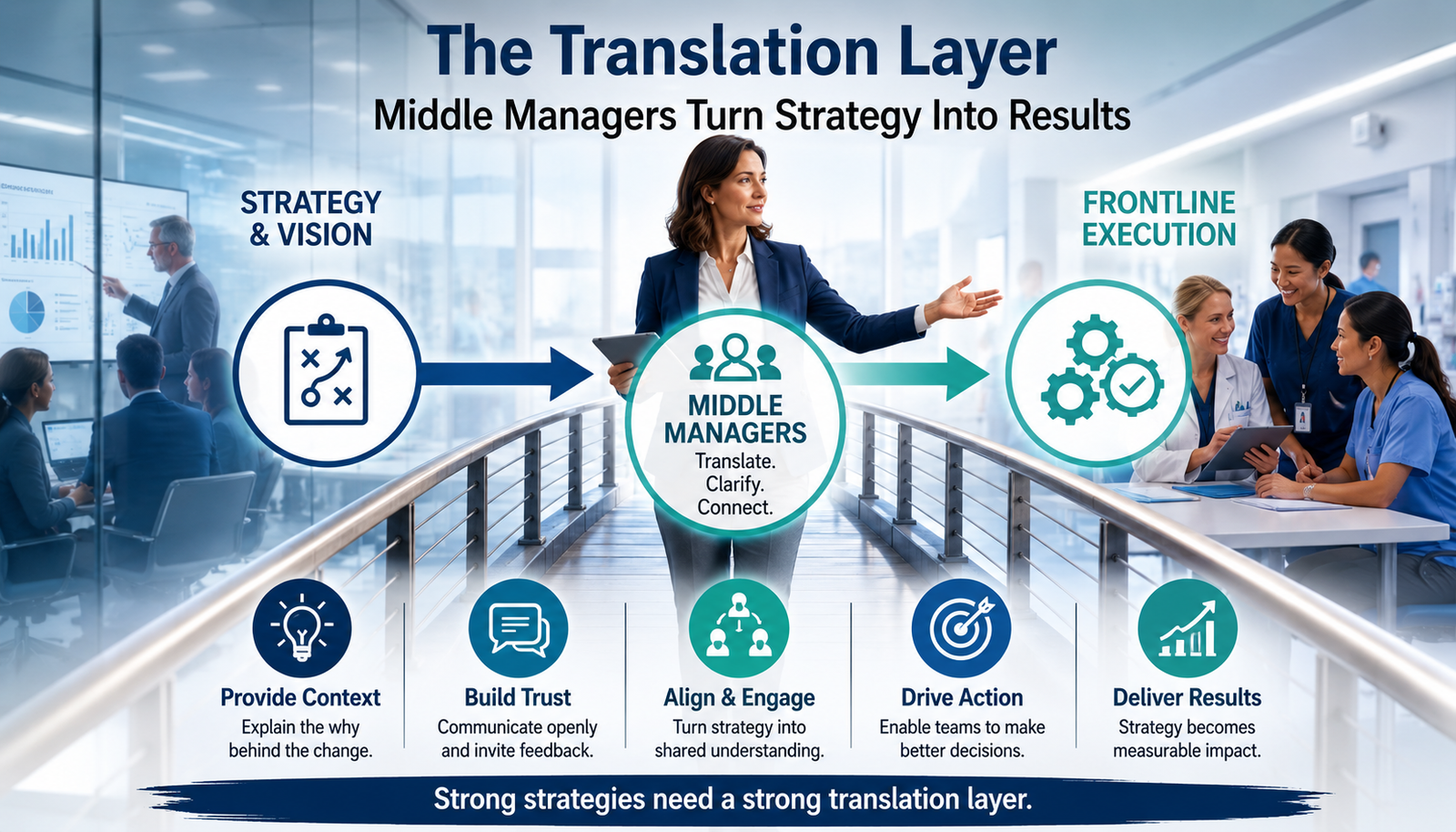
The Translation Layer: Why Middle Managers Determine Whether Healthcare Strategy Succeeds
By SCM Professionals In healthcare, successful transformation depends on far more than executive vision or well-crafted strategic plans. While leadership defines direction, it is often middle managers who determine whether those ideas become meaningful operational improvements or stall before reaching the front lines. Too often, organizations describe middle managers as the people responsible for “cascading…
-
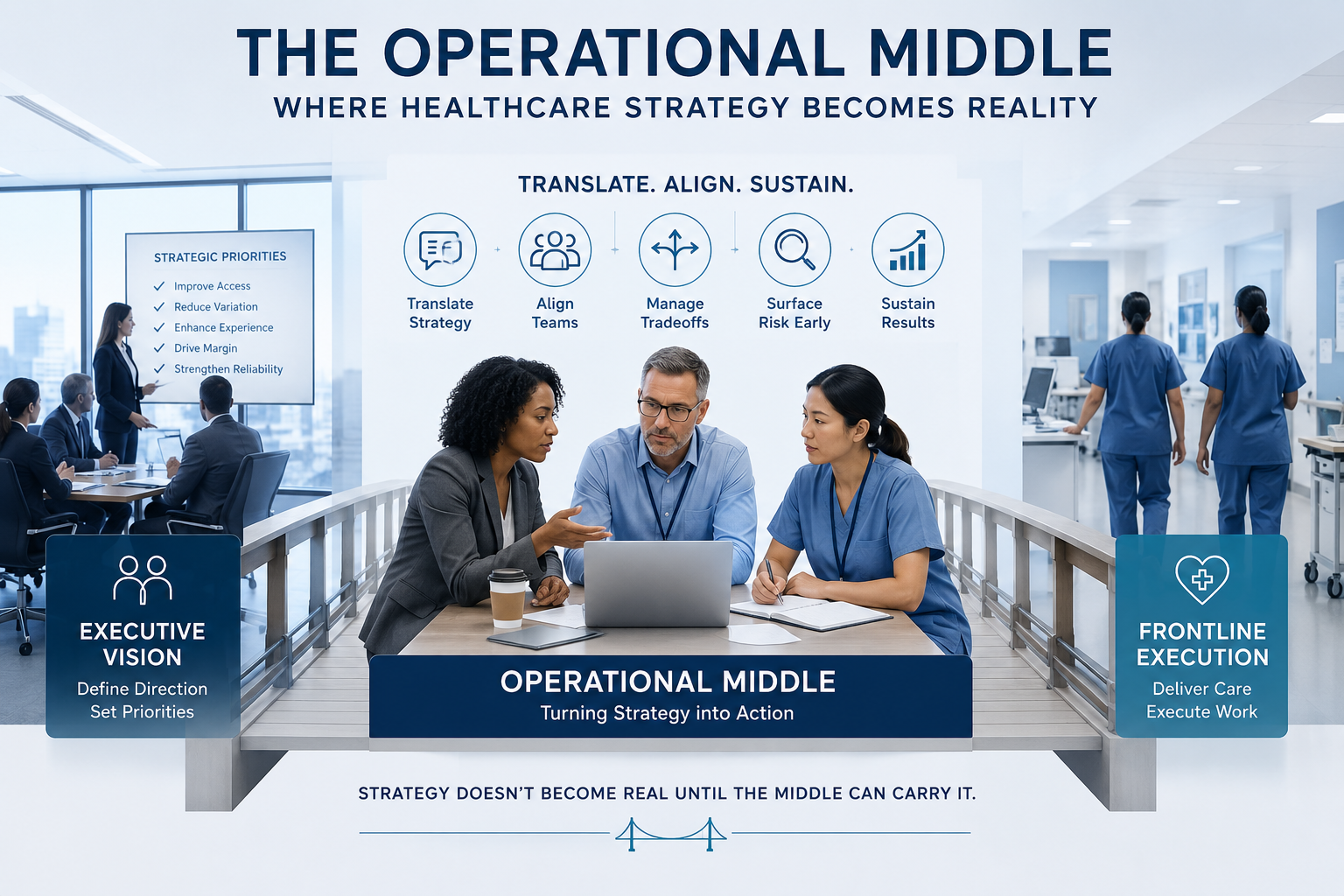
The Operational Middle: Where Healthcare Strategy Becomes Reality
By SCM Professionals Healthcare organizations invest significant time and effort developing strategies designed to improve performance, enhance patient care, strengthen financial sustainability, and drive operational excellence. In executive meetings and strategic planning sessions, these initiatives often appear clear, logical, and well aligned. Yet many organizations discover that even the most thoughtfully designed strategies struggle to…
-

Culture by Design: How to Build a System Where Clinical-Supply Chain Partnership Is the Default
By Keith Bresciani, for SCM Professionals Healthcare organizations often focus heavily on innovation, operational reform, and performance improvement. Yet one of the most influential drivers of sustainable success is frequently overlooked: organizational culture. Every healthcare system already has one. The real question is whether that culture was intentionally designed or simply inherited over time. In…
-

It’s Not Resistance, It’s a Signal: Rethinking Pushback in Supply Chain Reform
By Keith Bresciani, for SCM Professionals In healthcare operations, one phrase gets used far too often when a project hits friction: “They’re just resistant to change.” It usually comes up when staff push back, workflows stall, compliance becomes inconsistent, or adoption falls short of expectations. In the moment, that explanation may feel convenient. But it…
-

The Cost of Working Alone: How Collaboration Debt Slows Down Healthcare Reform
By Keith Bresciani, for SCM Professionals Healthcare does not function in silos. It depends on coordination. Supply chain teams support clinicians with the right products at the right time. Clinical teams rely on dependable logistics to care for patients effectively. Finance monitors the cost impact across operations. IT keeps the infrastructure running behind it all.…
-

The Dashboard Isn’t the Destination: Why Supply Chain Metrics Need Context to Drive Change
By Keith Bresciani, for SCM Professionals In healthcare supply chain, metrics are everywhere. Fill rates. PAR utilization. Delivery times. Backorder counts. Inventory turns. Cost savings. These numbers matter. They help organizations track performance, identify trends, and guide decision-making. But there is a problem that many teams encounter: the assumption that the dashboard tells the full…